

Climate-controlled storage isn’t just for collectors or high-end antiques anymore. Plenty of everyday items can take a beating from temperature swings and humidity. Furniture, paperwork, electronics, and clothing are more vulnerable than most people realize. The damage usually doesn’t show up until you open the unit. Whether you’re a homeowner, business owner, or contractor, stable storage conditions are just practical. Knowing what climate control actually does is the first step to avoiding a loss you didn’t have to take.
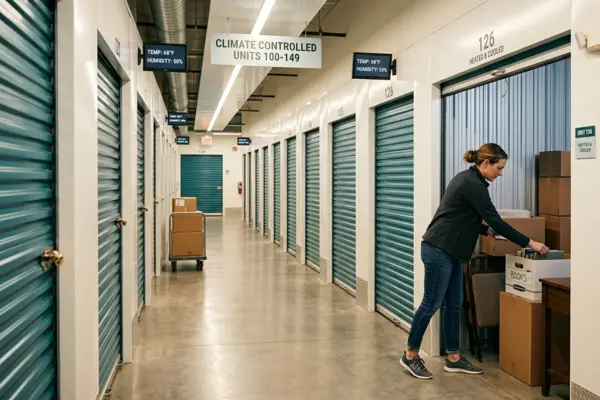
Why Standard Storage Units Fall Short
A climate-controlled storage unit takes the guesswork out of protecting your belongings. It holds steady temperature and humidity levels no matter what’s happening outside. And more renters are choosing this option every year for good reason. SpareFoot’s 2025 self-storage data shows climate-controlled units averaging $134/month. It’s a premium over standard units that the market has absorbed without a drop in occupancy.
They recognize the real threat posed by heat, cold, and humidity to stored belongings. Traditional containers are secure and weatherproof. But without temperature regulation, they leave sensitive items exposed. In the Northeast — Connecticut, Massachusetts, New York, and Rhode Island — summers are hot, and winters are brutal. That range alone can warp wood, corrode metal, and destroy electronics.
Benefit #1: Protection Against Temperature Damage
Climate-controlled storage units protect against the most damaging environmental force: temperature. Extremes are silent destroyers. Here’s what they do to stored items:
- Wood furniture warps, splits, and cracks
- Electronics suffer component failure from heat and condensation
- Artwork and photographs fade or become brittle
- Musical instruments lose shape and tuning integrity
- Wine and specialty foods degrade without consistent cool temperatures
A regulated unit holds a stable range, typically 55°F to 85°F. That single factor prevents most temperature-related damage. Explore Aaron Supreme’s custom container options to see how climate control fits into their storage solutions.
Benefit #2: Humidity Control Prevents Mold and Moisture Damage
People focus on temperature, but moisture is often the bigger threat. Unchecked humidity warps, stains, and ruins belongings faster than most expect. Climate-controlled storage facilities keep relative humidity between 35% and 55%, which stops that damage before it starts. The items most vulnerable include:
- Important documents — tax records, contracts, birth certificates
- Clothing and textiles — fabrics absorb moisture and develop mildew
- Metal tools and equipment — rust forms fast in humid conditions
- Antiques and collectibles — oxidation and surface damage are irreversible
For businesses in manufacturing, retail, or construction, a single humidity event can result in serious financial losses. Aaron Supreme builds containers tailored to industry-specific storage needs, with options designed to protect manufacturing and retail inventory in the long term.
Benefit #3: Ideal for Long-Term Storage
Short-term storage is forgiving. Leave something for two weeks — it’ll likely be fine. Leave it for six months or longer, and risks multiply fast. Climate-controlled storage unit solutions matter most for long-term use. Seasonal transitions expose items to repeated cycles of humidity and temperature. Each cycle causes stress — warping, swelling, contraction — that builds into real damage. The average rental duration is approximately 14 months, per industry data. They protect your items year-round. Browse Aaron Supreme’s storage containers for rent to find a flexible option.
Benefit #4: Better Protection for Business and Commercial Use. Businesses store things that they can’t afford to be damaged. Inventory losses, equipment failures, and ruined records all carry real financial consequences. Climate-controlled storage units provide a critical layer of protection for:
- Pharmaceuticals and medical supplies that require strict temperature compliance
- Electronics and tech components that degrade quickly in unregulated heat
- Food and beverage inventory that spoils quickly without proper temperature control
- Business records and documents are critical paperwork that need humidity-stable storage
Government agencies face the same requirements. Aaron Supreme’s municipal and government storage solutions include climate-controlled options for sensitive records and equipment. For commercial clients, this can be a compliance requirement. Protecting assets keeps your operations running.
Benefit #5: Peace of Mind for Vehicle and Specialty Storage
Climate-controlled vehicle storage is a growing category — for good reason. Extreme temperatures severely damage classic cars, motorcycles, and specialty vehicles. Rubber seals crack. Paint oxidizes, interiors develop mildew, and electronics malfunction. A standard unit protects against theft. It can’t protect against slow environmental damage over a storage season. The same applies to boats and RVs stored through winter. A regulated environment preserves materials, seals, and mechanical components. Your vehicle comes out the same way it went in. Aaron Supreme’s container customization options include modifications designed to protect high-value assets across the Northeast.
Make the Right Choice for Your Storage Needs
Deciding whether to have a climate-controlled storage doesn’t have to be complicated. Storing items sensitive to heat, cold, or moisture? The answer is almost always yes. Aaron Supreme has helped homeowners and businesses across Connecticut, Massachusetts, New York, and Rhode Island since 1964. As a third-generation family business, they bring personal attention to every rental or purchase. Ready to protect what matters? Call 1-800-243-0403 for a quote, or visit the contact page to get started.
Frequently Asked Questions
Do I need climate-controlled storage for furniture?
Yes, especially for wood furniture stored longer than a few weeks. Wood is highly sensitive to humidity. It expands when moisture rises and contracts when air dries out. Over multiple seasonal cycles, that movement causes warping, splitting, and joint failure. Upholstered pieces are vulnerable to mildew in humid conditions.
How does a temperature-regulated storage unit differ from a standard one?
A standard unit does the basics. It keeps things dry and secure, but what happens inside follows whatever the weather does outside. Brutal summer heat, freezing winter temps, and everything in between. Climate-controlled storage facilities maintain a steady temperature between 55°F and 85°F and keep humidity at safe levels year-round. That consistency is what prevents warping, rust, mold, and moisture buildup over time. A standard unit is fine for items that can take the elements. Anything valuable, fragile, or irreplaceable needs better than fine.
How much does temperature-regulated vehicle storage cost compared to standard storage?
Expect to pay a bit more than you would for a basic unit. The gap depends on container size, location, and how long you need it. Industry data puts the average around $134 a month for a standard 10×10, about $15 more than a non-regulated unit. Larger vehicle containers scale up from there. For most people, that difference is easy to justify. One repair bill for cracked seals or oxidized paint can wipe out months of what you would have saved going cheaper.