A storage trailer solves real space problems for busy businesses across the Northeast. Whether you’re managing seasonal inventory or a busy jobsite, extra room matters. Many owners rent or buy a unit, then only use half its potential. That leaves money and convenience on the table. Below are seven simple, practical ways to get more value from your trailer. These tips work whether you need short-term storage or a permanent solution. Each one is easy to apply, no matter your industry or budget. Follow them, and your unit becomes a true extension of your workspace.
1. Choose Between Storage Trailers for Sale or for Rent
Not sure whether to buy or rent? It really comes down to the timeline. A short project or seasonal overflow usually calls for a rental. Need space on-site for years instead? Buying often makes more sense. Request a quote, and we will walk you through pricing on both. Think about how long you will realistically need the room. That alone usually points you toward the right choice. Either way, you get secure, on-site space without new construction.
| Option | Best For | Typical Timeframe |
|---|---|---|
| Rent | Seasonal inventory, short jobs | Weeks to months |
| Buy | Permanent, ongoing storage needs | Long-term ownership |
2. Use Vertical Space to Fit More Into Storage Trailers
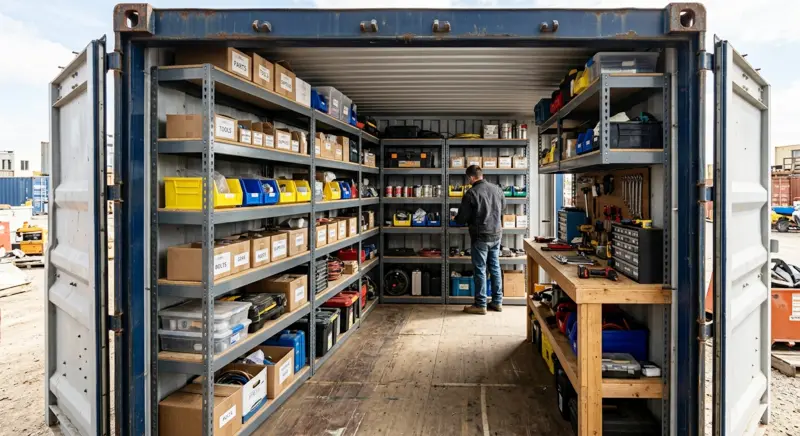
Look up, not just around, when loading a trailer. Stacking shelves or bins vertically frees up floor space fast. Warehouse experts note that vertical space is one of the simplest ways to increase storage capacity. This works whether you found the right size trailer through our service area or already own one. Add wall-mounted racks for smaller items. Keep heavier boxes low and lighter ones stacked higher for safety. A little planning here goes a long way toward a tidier, safer trailer.
3. Match Trailer Size to Your Actual Inventory
Oversized units waste money, while undersized ones create clutter fast. Our storage trailers for rent and for sale come in sizes from 26 to 45 feet. Measure your inventory before choosing a size. Consider future growth too, especially for seasonal businesses. Check out our full storage trailer lineup to compare options. Getting the size right the first time saves you a costly swap later. It also keeps loading and unloading fast and organized. Our team is happy to walk you through sizing questions over the phone.
4. Rely on Cold Storage Trailers for Perishable Goods
Restaurants, caterers, and grocers often run short on cold space. These trailer containers fix that by holding perishables at a safe temperature during peak season. It also covers catering jobs and downtime. Ask about custom modifications if you need refrigeration built into your unit. A properly sized cold unit protects your product and your bottom line. Check the temperature range against what your goods actually need. Match it with the right insulation to avoid spoilage and lost inventory.
5. Use Storage Trailers to Simplify Your Next Relocation
Moving a household or business location takes careful, serious planning. A trailer gives you a mobile, secure spot to stage things during the move. Load it gradually instead of scrambling to fit it all into one long day. That cuts down on stress and the odds of damage. Park a unit on-site, and you skip back-and-forth trips. Your belongings stay close, dry, and protected. That peace of mind counts for a lot during an already hectic week.
6. Add Locks and Security Accessories
Storing your stuff is the easy part here. Keeping your storage trailer truly safe takes a solid lock, some lighting, or an alarm. Our accessories and security options are built with high-value gear in mind. Small upgrades go a long way toward keeping thieves out. Whenever you can, park your trailer somewhere well-lit and visible. Check the hinges and locks now and then to catch problems early. Good habits here protect both your inventory and your bottom line.
7. Schedule Delivery, Transport, and Maintenance
Storage trailers earn their keep when placed and maintained properly. Our container transport team drops it at your site, saving hassle. Routine checks catch rust, leaks, or a sticky door before they become real problems. Keep the trailer in good shape, and it lasts longer. Line up pickups and drop-offs with your schedule for smoother runs. A little upkeep now beats a repair bill later. Our dispatch yards cover the region, so deliveries show up fast.
Get More From Your Storage Trailer With Aaron Supreme
Getting the most from a storage trailer comes down to planning, sizing, and upkeep. Aaron Supreme has served Connecticut, Massachusetts, Rhode Island, and New York since 1964. Our team helps you pick, place, and maintain the right unit for your needs. Whether you’re renting for a season or buying for good, we’re ready to help. Our family-run business has kept the same values since day one. Call us at 1-800-243-0403 to request a quote today. You can also reach out through our contact page anytime.
Frequently Asked Questions
How much does it cost to rent a storage trailer?
Cost depends on trailer size, rental length, location, and any custom features you need. Refrigerated or heavily modified units typically cost more than standard trailers. Long-term rentals or purchases often bring better overall value than repeated short rentals. The best way to get an accurate number is a direct quote. Aaron Supreme has priced units for Northeast businesses since 1964. Our team can also suggest a size or feature set that fits what you’re storing.
What size storage trailer do I need?
How much you need to store decides your right trailer size. Our trailers run anywhere from 26 to 45 feet long. Go smaller for seasonal overflow or a short-term job. Go bigger for ongoing inventory, a construction site, or a full move. Measure your biggest items and get a rough sense of total volume first. Not sure? Size up; it beats paying for a mid-project upgrade later. Our team can help you find the right fit, whether you are renting short-term or keeping a unit long-term.
Can a storage trailer keep items cold or climate-controlled?
Yes, that is exactly what cold storage trailers are for. Restaurants, caterers, and retail shops use them all the time. Need refrigeration or climate control? We can build that into a standard trailer. It keeps perishables safe, whether it is peak season or your cooler just quit on you. Know the temperature range your goods need before you commit. Aaron Supreme handles that setup across the Northeast.