Shipping container modifications turn a basic steel box into something built for a specific job. Aaron Supreme has handled custom builds for businesses in Connecticut, Massachusetts, Rhode Island, and New York since 1964. Some projects need only a single door cut in. Others call for a full interior build-out with shelving, lighting, and insulation. Knowing which modifications actually solve a problem makes the difference. A container that works beats one that just sits unused. This guide covers the five most requested modifications and what each one is actually good for.
1. Personnel Doors and Door Modifications
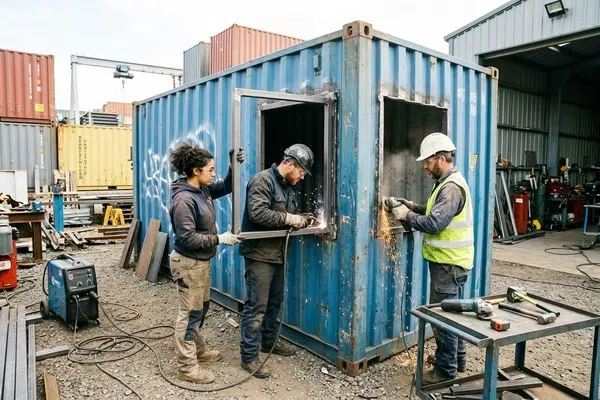
Among the changes Aaron Supreme sees most often, shipping container door modifications top the list. Walking in through a personnel door beats opening the full cargo doors every time. Offices, workshops, and storage accessed several times a day benefit most from this. Drive-through loading on busy job sites gets easier with additional cargo doors on the opposite end. Roll-up doors suit businesses that load pallets or equipment with a forklift. Every door cut requires reinforcement around the opening, since removing steel without support weakens the surrounding wall.
2. Custom Shipping Container Modifications for Windows and Cutouts
Windows bring in natural light and make a container feel less like a box. These modifications range from a single small window to full glass-panel walls. Cutouts for vents, exhaust fans, or air conditioning units fall into this category too. Each cutout removes steel that was carrying part of the container’s load. Corner castings and the steel frame carry most of a container’s structural strength, so cuts stay well clear of them. Aaron Supreme reinforces every opening with framing before finishing the wall. Cuts near the corners weaken the frame more than cuts near the center.
3. Shelving, Lighting, and Electrical Build-Outs
Interior build-outs are usually where container modifications for business use begin. Shelving units turn empty floor space into organized storage for tools, parts, or retail inventory. Electrical wiring and overhead lighting make a container usable after dark or during winter months. Outlets installed along the walls support power tools, computers, or point-of-sale equipment. Businesses that use a container as a mobile office or retail space usually need all three. Aaron Supreme coordinates these build-outs so wiring stays protected behind the shelving instead of being exposed.
4. Insulation and Climate Control
For anyone storing sensitive goods, storage container modifications for temperature control matter most. Spray foam insulation lines the walls and roof, cutting down on heat transfer in both directions. A wall-mounted air conditioner or heater keeps the interior livable during extreme weather. This combination works well for offices, break rooms, or storage holding anything that reacts poorly to temperature swings. Vapor barriers installed behind the insulation stop condensation from forming inside the metal walls. Skipping this step often leads to rust developing from the inside out.
5. Custom Shipping Container Modifications for a Full Office Build
Full office conversions combine most of the modifications above into one finished space. Insulation, electrical, windows, and a personnel door turn a container into a usable job-site office in weeks. Aaron Supreme’s office containers start from this same modification process. Multi-container builds go further, joining two or more units into a larger floor plan. We have even customized steel containers into a two-story house in New Haven, Connecticut.
Here’s how the five container modifications compare side by side.
| Modification | Purpose | Best For |
|---|---|---|
| Personnel & cargo doors | Easier access, loading | Offices, workshops, job sites |
| Windows & cutouts | Light, ventilation | Any occupied space |
| Shelving & electrical | Organization, power | Retail, mobile offices |
| Insulation & climate control | Temperature regulation | Sensitive storage, offices |
| Full office / multi-container builds | Complete workspace | Large projects, long-term use |
Get Your Shipping Container Modified Correctly
Doors, windows, shelving, insulation, and full office builds cover most requests for modified containers. Our in-house team handles welding, framing, and finishing without outsourcing. Aaron Supreme has handled shipping container modifications for clients in Connecticut, Massachusetts, Rhode Island, and New York since 1964. Whether you need one small cutout or a full custom build, we can scope the project and provide a quote. Call 1-800-243-0403 to discuss your container, or reach out through our contact page whenever it’s convenient.
Frequently Asked Questions
How much does it cost to modify a shipping container?
Cost depends heavily on the type and number of modifications requested. A single personnel door or window cutout costs far less than a full office build-out with insulation, electrical, and flooring. Multi-container projects or custom builds cost more because they require additional engineering and labor. Converting steel containers into a house is a good example. Reinforcement around cutouts adds to the price but protects the container’s structural integrity. Getting an accurate number usually requires a direct conversation about the specific modifications needed. Aaron Supreme provides free quotes based on each project’s scope, rather than a flat rate.
Can you add a window to a shipping container without weakening it?
Yes, you can add windows safely when the opening is framed and reinforced correctly. The main risk comes from cutting too close to the corner castings, which carry most of the container’s load. A properly framed window redistributes the weight the removed steel carried. Smaller windows generally pose less risk than large cutouts or multiple openings on the same wall. Professional welders check wall thickness and corner spacing before cutting, not after. Skipping reinforcement is the most common mistake that leads to warping or sagging over time. Always ask a supplier how they handle framing before approving work.
Do shipping container modifications require a permit?
Permit requirements depend on the modification type and how you’ll use the container. Adding a door or window for personal storage often doesn’t require a permit. Using a modified container as an office, home, or any occupied structure usually triggers local building code review. Multi-container builds, or permanent installations, almost always require permits and sometimes an engineer’s review. Rules vary significantly by town and state. The safest approach is to check with local zoning or building departments before starting work. Aaron Supreme can advise on typical requirements based on past projects in the area.